In the first half of November, Kazakhstan’s low-cost carrier FlyArystan took delivery of a new Airbus A320neo aircraft bearing registration number EI-KFJ. It became the 29th aircraft in the airline’s fleet. The aircraft was delivered directly from the Airbus facility in Toulouse and accommodates 188 passengers.
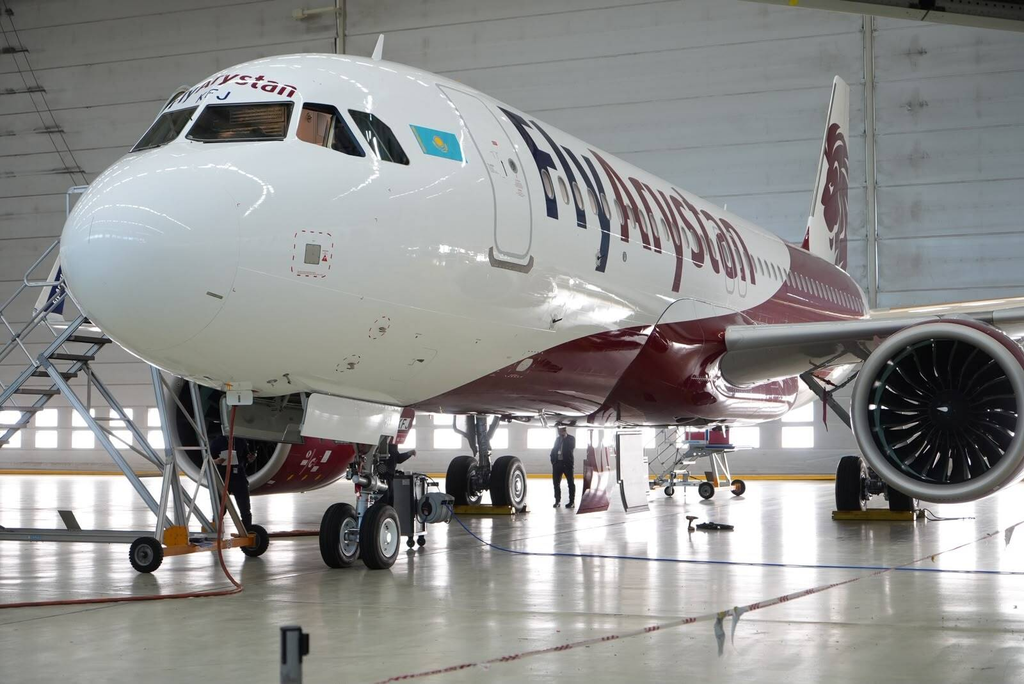
Prior to its handover, the aircraft underwent technical acceptance in Toulouse. FlyArystan specialists inspected the engines and airframe, as well as the aircraft’s systems, cabin and technical documentation. Ground checks were followed by an acceptance flight. Upon completion, the aircraft was officially handed over to the airline and departed for Kazakhstan.
The new aircraft was named “Atria”, after the brightest star in the Southern Triangle constellation.
The A320neo is a next-generation aircraft from Airbus’s family of narrow-body airliners. Powered by Pratt & Whitney engines and equipped with Sharklets wingtip devices, it consumes approximately 20% less fuel per passenger seat compared with previous-generation models. Its noise footprint during take-off and landing is also almost half that of earlier models. Following Atria’s arrival, next-generation aircraft accounted for nearly half of FlyArystan’s fleet.
“The delivery of our 29th aircraft is another step in the growth of our fleet and in Kazakhstan’s leadership in Central Asian aviation. New-generation aircraft now make up almost half of our fleet and burn less fuel per seat, which helps us keep fares affordable. We will continue to develop our fleet so that more people can fly within Kazakhstan and beyond, paying only for what they need,” said Johan Eidhagen, President of FlyArystan.
Nearly One in Four Aircraft in Kazakhstan’s Scheduled Aviation Fleet
The fleet expansion further strengthened FlyArystan’s position as Central Asia’s largest low-cost carrier. Kazakhstan’s scheduled civil aviation fleet comprised approximately 111 aircraft, meaning that nearly one in every four aircraft operated in FlyArystan livery. By comparison, Uzbekistan’s largest private airline, Centrum Air, planned to increase its fleet to 21 aircraft by the end of the year.
The Economic Contribution of a Single Aircraft
Basing a single A320-family aircraft represents the attraction of aviation assets worth approximately USD 100 million. Each aircraft can generate 40–60 direct jobs, including pilots, cabin crew, engineers and ground staff, while supporting an additional 100–150 jobs in related industries such as technical and ground handling services and airport operations. The annual contribution of one based aircraft to the local economy could reach USD 10–25 million.
FlyArystan’s 29-Aircraft Fleet: What It Means for Kazakhstan’s Economy
With a fleet of 29 aircraft, FlyArystan’s aviation assets could be valued at close to USD 3 billion. Based on average estimates per aircraft, 29 aircraft could generate between 1,160 and 1,740 direct jobs and support a further 2,900–4,350 jobs in related industries, bringing the estimated total to approximately 4,000–6,000 jobs. According to preliminary estimates, the fleet’s annual contribution to the national economy could range from USD 290 million to USD 725 million.
The fleet expansion increased the number of flights and passenger seats on domestic and international routes, making air travel more accessible to people across Kazakhstan.