[Aviation News] The Civil Aviation Administration of China (CAAC) and the Civil Aviation Committee of Kazakhstan’s Ministry of Transport held a bilateral civil aviation meeting in Beijing. The two sides exchanged views on topics including route expansion, air connectivity development, airspace optimization, and aviation safety, reaching multiple cooperation consensuses.
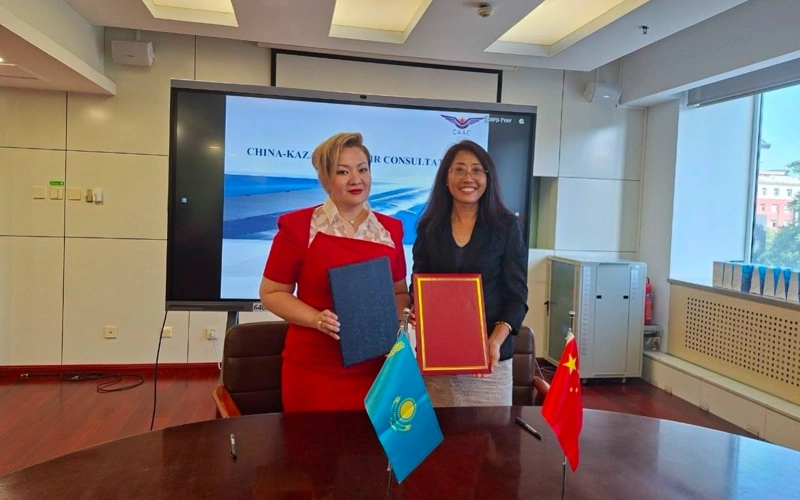
According to the Civil Aviation Committee of Kazakhstan’s Ministry of Transport, the two sides agreed to further expand scheduled passenger services between China and Kazakhstan, increasing the number of weekly scheduled passenger flights operated by Chinese and Kazakh airlines from 124 to 152, representing an increase of 28 weekly flights. Meanwhile, the number of Chinese cities served by scheduled China–Kazakhstan flights will increase to 11, with Chongqing becoming one of the newly added destinations, further improving the bilateral aviation network.
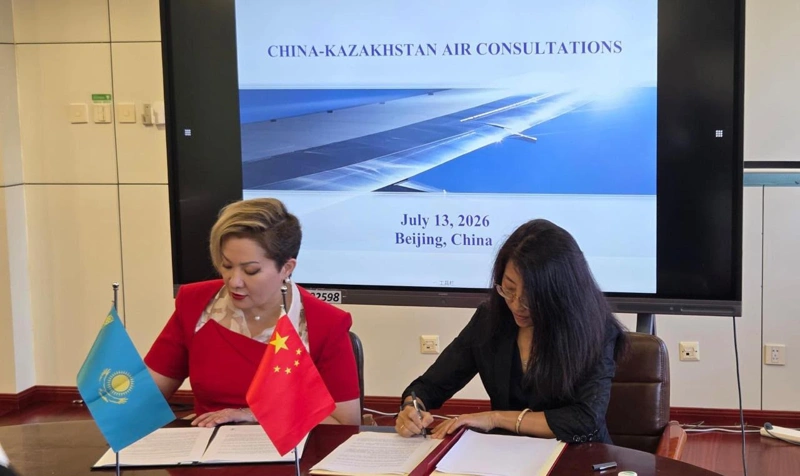
In addition to flight capacity expansion, the two sides also discussed the potential launch of a direct Astana–Shanghai route, including the possibility of Chinese airlines participating in the operation of the service. They also exchanged views on the development of a third international air route between China and Kazakhstan. Once completed, the new air route is expected to improve airspace utilization efficiency, optimize flight planning, and ease operational pressure on existing routes.
During the meeting, the two sides also discussed issues including Kazakh airlines’ access to airport slots in China, the use of Chinese airspace, and strengthened cooperation in civil aviation search and rescue operations.
The further expansion of China–Kazakhstan civil aviation cooperation will continue to strengthen air transport connectivity between the two countries. Currently, a multi-city aviation network has been established between China and Kazakhstan. With additional capacity and newly connected cities gradually being implemented, future passenger exchanges and air transport demand between the two countries will benefit from greater convenience.